










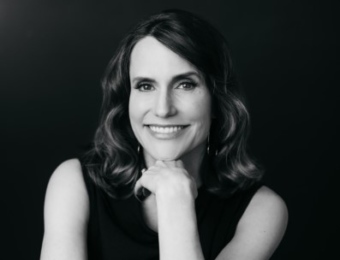
Peter Hakim is president of the Inter-American Dialogue, a Washington-based center for policy analysis and exchange on Western Hemisphere affairs.
Hakim writes and speaks widely on hemispheric issues, is regularly interviewed on radio and television, and has testified more than a dozen times before Congress. His articles have appeared in Foreign Affairs, Foreign Policy, the New York Times, the Washington Post, Miami Herald, Los Angeles Times, and Financial Times, and in many Latin American newspapers and journals. He was a vice president of the Inter-American Foundation and worked for the Ford Foundation in both New York and Latin America. He has taught at MIT and Columbia. He has served on boards and advisory committees for the World Bank, Council on Competitiveness, Inter-American Development Bank, Foreign Affairs en Español, Partners for International Change, and Human Rights Watch. He is a member of the Council of Foreign Relations.
Peter Hakim earned a B.A. at Cornell University, an M.S. in Physics at the University of Pennsylvania, and a Master of Public and International Affairs at Princeton University's Woodrow Wilson School.
Crisbellt Alvarado-Rezola is the Grants and Finance Manager. She joined the Dialogue on November 2005 as Accountant Assistant. She is a native of Venezuela and has a B.S. in business administration from the Universidad de Carabobo, Valencia City. Previously, she worked at the Environment and Natural Resources Department of the Inter-American Development Bank and at The Washington Center for International Solutions, where she assisted the Hispanic community in immigration matters. She also helped her parents start two companies in her home town, where she worked until she moved to the United States.
Katherine Anderson is vice president for finance and administration at the Inter-American Dialogue. Before joining the Dialogue, she worked at the corporate headquarters of Right Management Consultants, first as quality assurance manager and subsequently as director of administration. She was previously a co-founder and partner of Kushnir/Anderson Associates. Anderson holds an M.S.W. from Ohio State University and an M.B.A from Temple University.
Genaro Arriagada was appointed non-resident senior fellow of the Inter-American Dialogue in January 2008. Arriagada has served as minister of the presidency of Chile, ambassador of Chile to the United States, chairman of the Board of Radio Cooperativa, and national director of the “NO” Campaign, which defeated General Augusto Pinochet in the plebiscite of October 1988. Arriagada served as ambassador-at-large and special envoy of the president of Chile to the Second Summit of the Americas in Santiago, Chile in April 1998. He was head of Ricardo Lagos’ 1999 presidential campaign and of Eduardo Frei’s 1993 presidential campaign.
Arriagada is on the Board of Universidad de las Américas; senior advisor to the president of the Club de Madrid; and editor of www.asuntospublicos.org. In January and February of 2007, he was public policy scholar at the Woodrow Wilson International Center for Scholars. Arriagada has published a dozen books and numerous articles and columns regarding political, social, and economic issues, including Pinochet: The Politics of Power (Boston: Unwin & Hyman, 1988) and with Carol Graham, “Chile: Sustaining Adjustment during Democratic Transition” in Voting for Reform. Democracy, Political Liberalization and Economic Adjustment (Oxford University Press, 1994). He has been a fellow of The Woodrow Wilson Center (1978-79) and The John F. Kennedy School of Government at Harvard University (1990).
Erik Brand manages the Dialogue's corporate outreach efforts and serves as general manager of our business publishing operations, which include the Latin America Advisor newsletters. He was previously the associate publisher at the International Advisory Group, Inc. in New York City. He had served as a consultant to the Dialogue, when he planned and launched the Dialogue's Corporate Circle program. He graduated with a double major summa cum laude from Wheaton College and has completed some coursework toward a masters degree at the University of Maryland and University of Minnesota.
Joan Caivano is deputy to the president and director of special projects. She directs the Dialogue's project on press freedom issues and its work on women's leadership in the Americas. She manages a range of institutional responsibilities, including the Dialogue's Sol Linowitz Forum, its publications program, outreach to the press, and membership issues. She worked previously at the Overseas Development Council and the Brookings Institution, and managed several small business enterprises. She has been a frequent guest lecturer on issues of concern to women in Latin America at the Foreign Service Institute. She holds a masters degree in Latin American Studies from Georgetown University, where she also completed her undergraduate studies.
Nancy Castillo is program associate for the Remittances and Development program. Previously, she was a fellow in Public Affairs at the Coro Center for Civic Leadership where her consultancies included the Southwestern Pennsylvania Commission, Northside Community Grocer Cooperative, and Green Block Initiative. Castillo has studied abroad in Japan, Ghana, and was a Fulbright U.S. Student in Ecuador where her research focused on the financial intermediation of remittances from Ecuadorian emigrants. She has conducted research and fieldwork related to migrant transnational activities and microfinance in the United States and various countries in Latin America and the Caribbean, Asia, Africa and Europe. Castillo received her B.A. in political studies and Latin American studies from Pitzer College, one of the Claremont Colleges.
Daniel P. Erikson is the senior associate for U.S. policy and director of Caribbean programs at the Inter-American Dialogue. Erikson has published more than sixty articles in publications including The Los Angeles Times, The Miami Herald, and The Washington Post, and his book chapters appear in The Obama Administration and the Americas: Agenda for Change (2009), The Diplomacies of Small States (2009), Latin America’s Struggle for Democracy (2008), Looking Forward: Comparative Perspectives on Cuba’s Transition (2007), Taking Sides: Clashing Views on Latin America (2007), and Transforming Socialist Economies: Lessons for Cuba and Beyond (2005), which he co-edited. Erikson has taught Latin American politics at Johns Hopkins-SAIS, is frequently interviewed in U.S. and international media, and has testified before the U.S. Congress. His past positions include research associate at Harvard Business School and Fulbright scholar in U.S.-Mexican business relations. He earned a Masters in Public Policy as a Dean’s Fellow at Harvard’s Kennedy School of Government and a BA from Brown University. Erikson is the author of the highly acclaimed book, The Cuba Wars: Fidel Castro, the United States, and the Next Revolution (Bloomsbury Press, 2008), which was described by Current History magazine as “the most important book on Cuba in a generation.”
Amy B. Herlich joined the Dialogue in October 2009 as the Development Coordinator. Before coming to the Dialogue, she spent a year in Montevideo, Uruguay working as the International Programs Coordinator at Hillel Uruguay. She graduated in 2008 from the University of Pittsburgh with a dual B.A. in Hispanic Literature and Business, and Certificates in Latin American and Global Studies. While an undergraduate, Amy studied at the Universidad de Guanajuato in Mexico and with the Semester at Sea Summer 2007 Latin America Voyage.
Paul Isbell is the director of the Energy Program at the Elcano Royal Institute for International and Strategic Studies in Madrid, as well as the Institute’s senior analyst for international economy and trade. As of the autumn of 2008, he is based in Washington D.C. where he is representing the Elcano Royal Institute and collaborating with the Inter-American Dialogue as a visiting senior fellow. Before joining the Elcano Royal Institute in 2002, Isbell was the analyst for Emerging Markets and Currencies – with a focus on Latin America – at the Madrid-based investment bank of Banco Santander. For a number of years he was also a professor of economics and international political economy at many Spanish and American universities, including the University of Alcala de Henares, ICADE, CUNEF, Syracuse University and the George Washington University. His areas of interest include international economy, currencies, energy economics and geopolitics, as well as the political economy of emerging market countries in Latin America, Africa and Asia. Isbell received his BSFS from the Edmund A Walsh School of Foreign Service at Georgetown University and his MA from the University of Dar es Salaam in Tanzania where he studied under a Rotary International Foundation fellowship.
Danielle Jetton joined the Inter-American Dialogue in 1995. She currently serves as network administrator, providing general network support for the office as well as maintaining the database and web page. She holds a B.A. degree in English from Kenyon College and has completed training in computer network administration.
Mariellen Malloy Jewers is associate for the social policy program. Previously, she worked for the Center for the Study of Human Rights at Columbia University and was a research fellow for FINCA International, where she conducted field research in Latin America and presented a paper evaluating FINCA micro-credit programs’ social missions in Mexico and El Salvador. She also served as a Peace Corps volunteer in the Dominican Republic. She received her B.A. from the University of Massachusetts Amherst, and an M.A. in international affairs from Columbia University.
Gene Kuleta is the editor of the Dialogue's Latin America Advisor newsletters. He has worked in both print and broadcast journalism in locations including Washington, Chicago and Latin America and for news organizations including National Public Radio, WAMU Radio and the Chicago Tribune. He covered several economic and political issues during his time as a correspondent based in Guatemala. He earned bachelor's degrees in journalism, broadcasting and Spanish at North Central College in Naperville, Illinois and a master's degree in Latin American Studies at George Washington University in Washington, DC.
Michael C. Lisman is an associate with the education program, and coordinates activities in Central America for the Partnership for Educational Revitalization in the Americas (PREAL). He has worked at LASPAU: Academic and Professional Programs for the Americas, with the Harvard Initiative for Global Health, and as Peace Corps volunteer in the Dominican Republic. He received his B.A. from the University of Rochester, and a masters degree in International Education Policy from Harvard University.
Claudio M. Loser is a visiting senior fellow at the Dialogue, working on financial, macroeconomic and trade issues, focusing particularly on the management of financial crises in Latin America. A native of Argentina, Loser led the International Monetary Fund's activities in Latin America since 1994, where he was most recently the head of the Western Hemisphere department. He graduated from the University of Cuyo in Argentina and received his Masters of Arts and PhD from the University of Chicago.
Nora Lustig is Samuel Z. Stone professor of Latin American economics at Tulane University and nonresident fellow at the Center for Global Development and the Inter-American Dialogue. Previously she was Shapiro visiting professor of international affairs at the Elliott School of International Affairs, George Washington University; director of the poverty group at UNDP; president and professor of the Department of Economics of the Universidad de las Americas, Puebla, Mexico; senior advisor and chief of the Poverty and Inequality Unit at the Inter-American Development Bank; senior fellow at the Brookings Institution; and, professor at the Center of Economic Studies of the Colegio de Mexico. Her research has focused on poverty and inequality, social policies and social protection with particular emphasis on Latin America.
Dr. Lustig has published 15 books and more than 70 articles (33 in refereed journals). Dr. Lustig was co-founder and president of LACEA, the Latin American and Caribbean Economic Association; co-director of the World Bank’s World Development Report 2000/2001: Attacking Poverty; president of the Mexican Commission of Macroeconomics and Health; co-director of the UNDP project Markets, the State and the Dynamics of Inequality; and the director of the Inter-American Dialogue’s Social Report Card. She obtained her Ph.D. in Economics from the University of California, Berkeley.
Chris Moore joined the Dialogue in 2009 as program assistant for legislative affairs and economics and trade. He graduated Phi Beta Kappa from Trinity College (CT) in 2006 with a B.A. in Latin American studies and a minor in film. While at Trinity, he studied abroad in Italy, Spain, and Venezuela. Since graduating, Chris has directed and produced three feature-length documentary films—on elections in Venezuela, Senegal, and France.
Daphne Morrison joined the Dialogue in July 2008 as program assistant for the deputy to the president and director of special projects. She graduated from Middlebury College in 2008 with a B.A. in political science. Prior to university, she attended the Lester B. Pearson United World College of the Pacific, followed by a gap year in Ecuador, where she taught sexual health, math and literacy in a remote village in the Andes.
Manuel Orozco is senior associate and director of remittances and development at the Inter-American Dialogue. He has conducted extensive research, policy analysis and advocacy on issues relating to global flows of remittances, and migration and development worldwide. Dr. Orozco is chair of Central America and the Caribbean at the U.S. Foreign Service Institute. He is also adjunct professor at Georgetown University, where he is senior researcher at the Institute for the Study of International Migration. He frequently testifies before Congress and has spoken before the United Nations. Formerly, he was chair of Central America and the Caribbean at the U.S. Foreign Service Institute. Orozco holds a Ph.D. in political science from the University of Texas at Austin, masters in public administration and Latin American studies, and a BA in international relations from the National University of Costa Rica.
Manuel Orozco has published widely on remittances, Latin America, globalization, democracy, migration, conflict in war torn societies, and minority politics. His recent publications include reports for the U.S. Agency for International Development and the European Bank for Reconstruction and Development. His books include Remittances: Global Opportunities for International Person-to-Person Money Transfers (London: Lafferty Group, 2005) and International Norms and Mobilization for Democracy (London: Ashgate Publishers, 2002).
Tamara Ortega Goodspeed is senior associate with the education program, and coordinates the national and regional report card efforts for the Partnership for Educational Revitalization (PREAL). She holds a master's in public affairs with a focus on international development from Princeton University and an undergraduate degree in political science from Yale University. Prior to working at PREAL, she served as a Peace Corps volunteer, teaching English in Equatorial Guinea, and as a family educator for a local literacy project in Nebraska.
Marifeli Pérez-Stable is a non-resident senior fellow at the Dialogue and a professor at Florida International University. Her column on Latin American topics appears every other Thursday in the Miami Herald. Her opinion pieces have also appeared in El País, the Financial Times, La Vanguardia, El Clarín, Excelsior, El Nuevo Herald, and The Nation. She is an editorial contributor to the Real Instituto Elcano and Infolatam. She authored The Cuban Revolution: Origins, Course, and Legacy (Oxford University Press, 1993, 2nd edition 1999) which is under revision for a third edition. She is the editor of Looking Forward: Comparative Perspectives on Cuba’s Transition (University of Notre Dame Press, 2007). Looking Forward was a finalist in the ForeWord Magazine Book of the Year Award (2007). In 2001-2003, she chaired the task force on Memory, Truth, and Justice which issued the report, Cuban National Reconciliation. Marifeli is a member of the Council on Foreign Relations and an associate of COMEXI, the Mexican Council on Foreign Relations. (http://MarifeliPerez-Stable.com)
Siury Pulgar is program associate for the education program, and works with the coordinator of the report card efforts of the Partnership for Educational Revitalization in the Americas (PREAL). She is the founder of The 10,000 Book Challenge, an initiative to build libraries in underprivileged areas of Venezuela. She was named by El Nacional newspaper in Venezuela as one of the citizens of the year in 2008. She holds a masters degree in International Education Policy from Harvard University, and an undergraduate degree in social communications, with a concentration in journalism, from Andrés Bello Catholic University in Caracas.
Jeffrey M. Puryear is vice president for social policy at the Dialogue. He directs the Dialogue's education program - the Partnership for Educational Revitalization in the Americas (PREAL). He previously served as head of the Ford Foundation's regional office for the Andes and the Southern Cone, and as a research scholar at New York University. He received his Ph.D. in comparative education from the University of Chicago. Puryear has authored numerous articles on inter-American affairs. His book on intellectuals and democracy in Chile was published in 1994 by the Johns Hopkins University Press.
Yesenia Rivas is office and events manager at the Dialogue. She joined the Dialogue as office administrator in 2003. Previously, she worked in service and administration at ConAgra Foods, Inc. and Sears, Roebuck and Co. She also studied mechanical engineering at the University of Pittsburgh.
Landen Romei is program assistant for the Democratic Governance program and the Remittances and Development program. She graduated summa cum laude from Washington University in St. Louis with a B.A. in Latin American studies and Spanish as well as a minor in Portuguese. She has interned as a translator in Oaxaca, Mexico, taken classes for a semester in Santiago, Chile, and conducted independent research on contemporary slavery in the northeast of Brazil.
Matthew Schewel is the reporter and assistant editor for the Latin America Advisor newsletters. Before coming to the Dialogue, he taught for three years in a bilingual classroom at Southwest Elementary in Durham, NC. He also completed an internship at the Guadalajara Reporter, an English-language weekly in Guadalajara, Mexico. Schewel earned a B.A. in history with a certificate in Latin American studies at Duke University and studied abroad in Bolivia and Uruguay.
Michael Shifter is vice president for policy and director of the Andean program at the Inter-American Dialogue. Since 1993, he has been an adjunct professor of Latin American politics at Georgetown University's School of Foreign Service. Shifter writes and comments widely on U.S.-Latin American relations and hemispheric affairs. His recent articles have appeared in major U.S. and Latin American publications such as The New York Times, Foreign Affairs, Foreign Policy, The Washington Post, The Los Angeles Times, Journal of Democracy, Harvard International Review, Clarín, O Estado de S. Paulo, and Cambio. He is also co-editor, along with Jorge Domínguez, of Constructing Democratic Governance in Latin America, published by Johns Hopkins University Press. Since 1996, he has regularly testified before Congress about U.S. policy towards Latin America.
Prior to joining the Inter-American Dialogue, Shifter directed the Latin American and Caribbean program at the National Endowment for Democracy and, before that, the Ford Foundation's governance and human rights program in the Andean region, based in Lima, Peru, and Southern Cone, based in Santiago, Chile. He is contributing editor to Current History and a member of the Council on Foreign Relations. He has a BA from Oberlin College and a Master's degree in sociology from Harvard University.
Adam Siegel joined the Dialogue in 2009 as program assistant for the Andean region. He graduated with honors from Brown University in 2009 with a B.A. in Latin American Studies and Hispanic Studies. While at Brown he conducted research in Bolivia and was awarded the William Fichter Outstanding Hispanic Studies Senior Award and the Thomas E. Skidmore Award for Excellence in an Honors Thesis. Siegel has also lived in Lima, Peru, where he studied at the Pontificia Universidad Católica del Perú.
Elizabeth Stokely joined the Dialogue in August 2009 as program assistant for the education program. Previously, she taught English with a Fulbright grant in Cali, Colombia. She graduated Phi Beta Kappa from Dickinson College in 2008 with a B.A. in international studies and Spanish. While at Dickinson, Stokely studied for a year in Málaga, Spain, completing an internship with Movimiento contra la Intolerancia (MCI), a human rights organization dedicated to conducting school awareness programs.
Viron Peter Vaky is a senior fellow focusing on multilateral governance and U.S.-Latin American relations. A retired career foreign service officer, he was formerly United States ambassador to Costa Rica, Colombia and Venezuela and assistant secretary of state for inter-American affairs. Following retirement from the foreign service, he was associate dean and research professor in diplomacy at Georgetown University's School of Foreign Service, and senior associate at the Carnegie Endowment for International Peace.
Paul Wander is program associate for Cuba and the Caribbean. He joined the dialogue as program assistant after graduating from the College of William and Mary in 2006 with a B.A. in economics and history. At William and Mary, he was a James Monroe Scholar and a 2005 recipient of a Borgenicht Foundation grant which funded his study of indigenous language and economic policy in the Andes.